









The smart:limit user guide
This user guides has all tutorials about how to work with smart:limit's features in one place. Check out what smart:limit offers – there are a lot of great things to discover.
Read more
Smart compression and limiting for every mix
Get our our intelligent compressor and limiter for complete dynamics control. Shape punch and consistency, then achieve competitive loudness in a faster workflow.

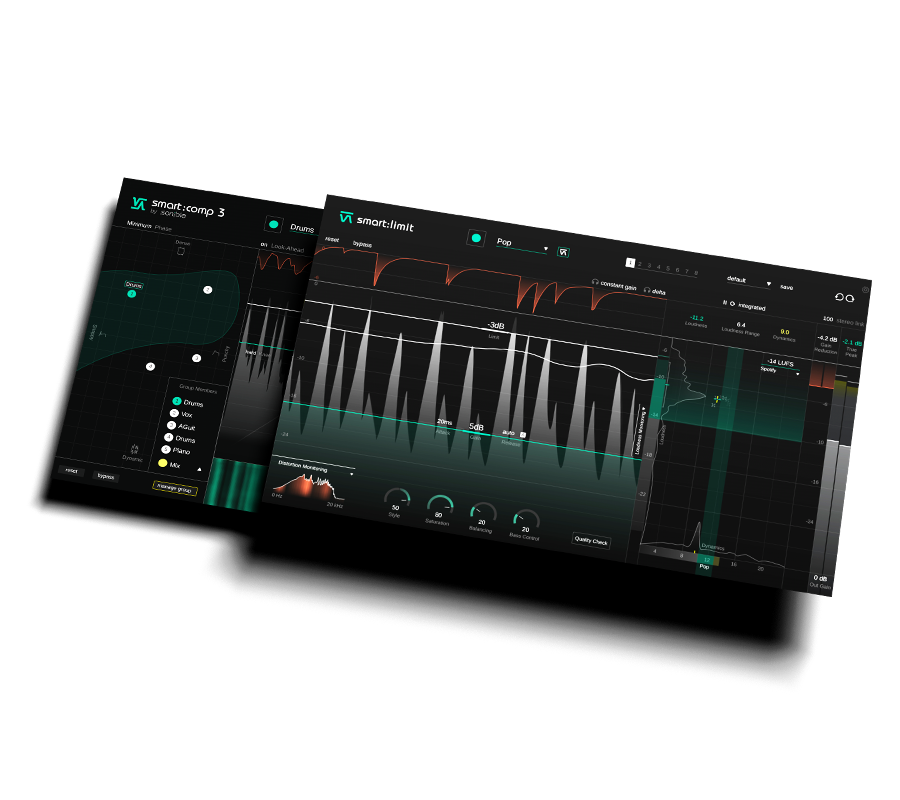
2 plug-ins worth €258.00 for €119.00 — you save €139.00
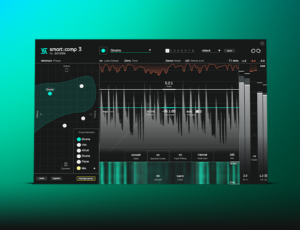
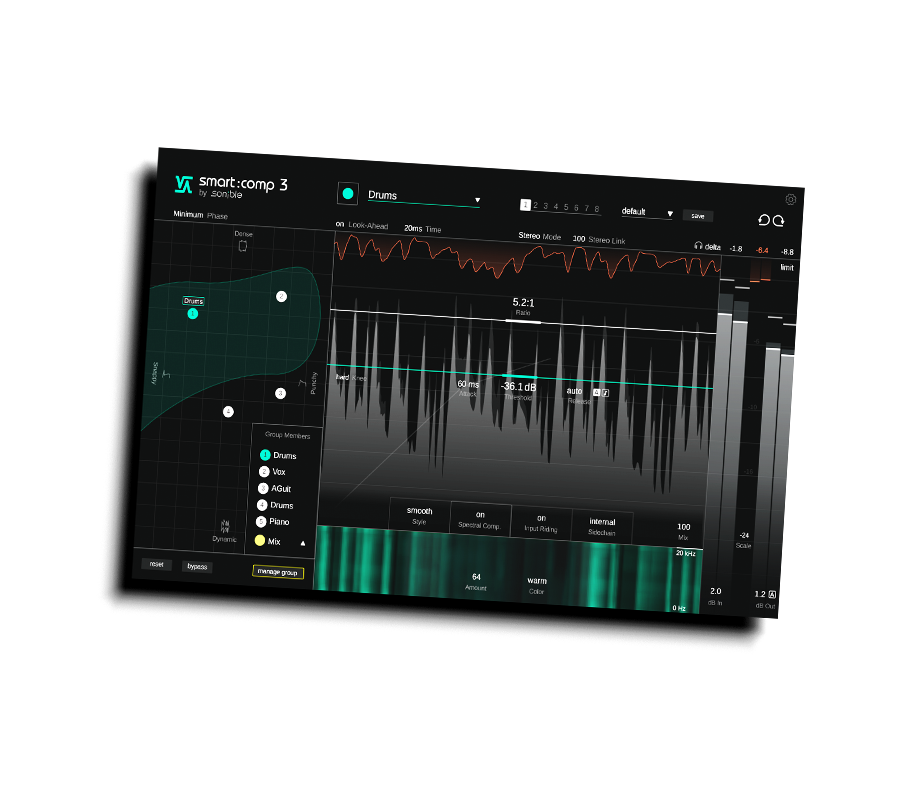
Our intelligent compressor features spectral processing for transparent dynamic control. Get tailored settings fast while keeping full control over your sound.
Included in the bundle — €129.00 if bought separately
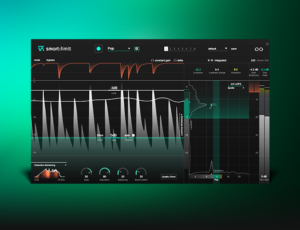
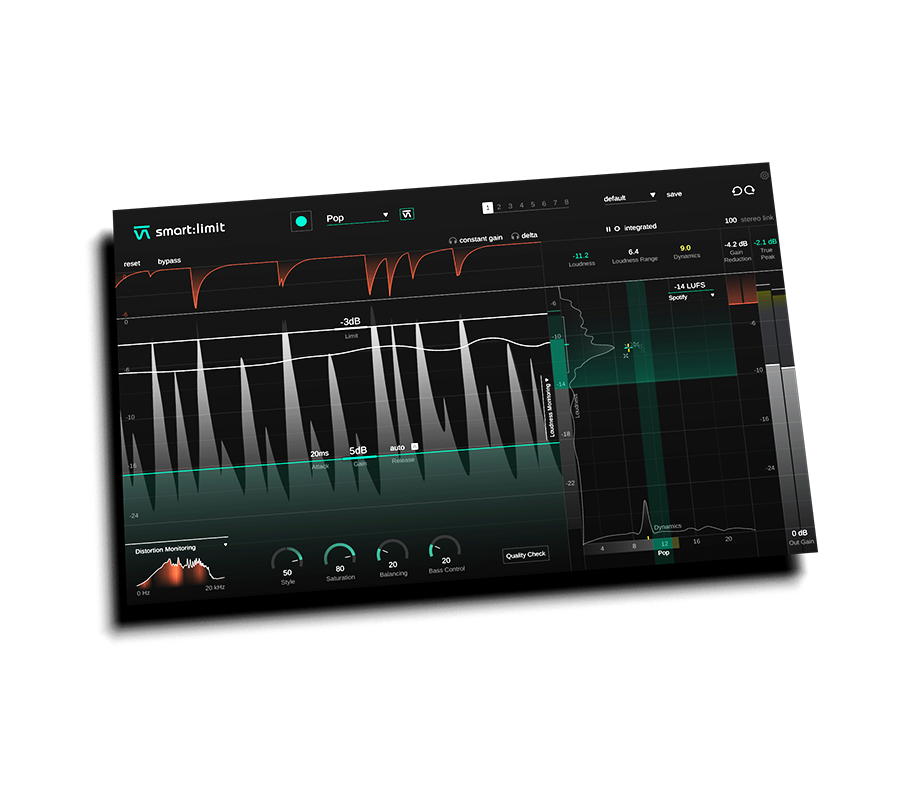
This is our intelligent limiter for transparent loudness and detailed metering. Reach loudness targets quickly while preserving dynamics and sound quality.
Included in the bundle — €129.00 if bought separately

Mixbus TV
White Sea Studio
Markus Junnikkala
Audio Toolshed
Claudio Meloni
Weiss Advice
Warp Academy
Creative Sauce
SPL Mixing
SoulPi Records
FAQ
smart:comp 3’s Input Riding adjusts the signal level before compression to improve how the compressor reacts. pure:level, on the other hand, stabilizes the signal itself and places it in the mix using a target level - without applying compression or changing the signal’s dynamics.
The idea is similar, but it’s optimized for compression workflows. Input Riding applies slow level adjustments before the compressor "sees" the signal. This allows the compressor to focus on shaping transients and short-term dynamics rather than compensating for overall level differences of a signal.
You can think of it as an automatic pre-leveling stage that behaves like a smooth, intelligent fader move - with a target level learned from your audio.
The Compression Matrix is where you shape how smart:comp 3 responds to your audio. Instead of manually dialing in threshold, ratio, attack and release, you simply move a thumb through thsi 2D grid. Every position represents a complete, signal-adapted compressor setup - from snappy and punchy to dynamic or dense. It gives you a visual, intuitive way to pick the compression character you want.
When you manually adjust the main parameters manually (threshold, ratio, attack, release), the thumb in the Matrix moves as well. And the other way around - moving the thumb updates the compressor parameters in real time. This keeps everything in sync and helps you clearly understand how your compression settings relate to the perceptual space of the Matrix.
Since oversampling is a quite well known metric for dynamics tools like limiters, some users asked us about the exact oversampling factor of smart:limit.
The answer to this question is a bit tricky. smart:limt is based on a quite complex (and unique) multi-stage limiting process. Different stages are running at different resolutions - so listing a single oversampling factor simply doesn’t really make sense for our design. So while there's no single reference value to calm your mind, rest assured that smart:limit is using high-resolution oversampling throughout the whole limiting chain where necessary. 😉
smart:limit is using the median of all measured PSR values (PSR = peak to short-term loudness ratio, see formula below) for measuring the dynamics. Although the PLR value (peak to long-term loudness ratio) is a more commonly used descriptor for dynamics, we found that our descriptor better matches the actual - also short term - dynamics of a track.
Our tests showed that the PLR value can sometimes be a bit misleading since it’s (basically) simply another descriptor for the integrated loudness. For example, if multiple tracks are normalised to -1dB True Peak, the PLR value is simply their Integrated Loudness value subtracted by 1.
PSR:
The PSR is the difference between the Short Term Loudness value and the maximum True Peak value measured within a window of 3 seconds.
PSR = Max. Peak - Short Term Loudness
=> computed within a 3 second window
PLR:
The PLR is the difference between the Integrated Loudness value and the maximum True Peak value measured over the whole observation period (e.g. typically the whole track).
PLR = Max. Peak - Integrated Loudness
=> computed over the whole observation period
It’s both! smart:limit combines high-class true peak limiting with comprehensive integrated loudness monitoring. That way users don’t have to use multiple tools and the revolutionary Instant Impact Prediction instantly reflects all parameter changes of the limiter in the loudness monitoring section.
“I am a huge fan of smart:limit. It makes everything much easier without feigning hidden magic. Great results in next to no time which are adaptable to meet my needs.”
– Ralf Christian Mayer

Musician, songwriter, music producer
“smart:comp 3 redefines how compression can be approached without dumbing it down or hiding professional control.”
– Oliver Schmitt
Sound Designer | Sounds of Revolution
This user guides has all tutorials about how to work with smart:limit's features in one place. Check out what smart:limit offers – there are a lot of great things to discover.
Read more

Loudness is a much-discussed topic in the world of audio production. But what about dynamics? We tell you why they need much more attention.
Read more
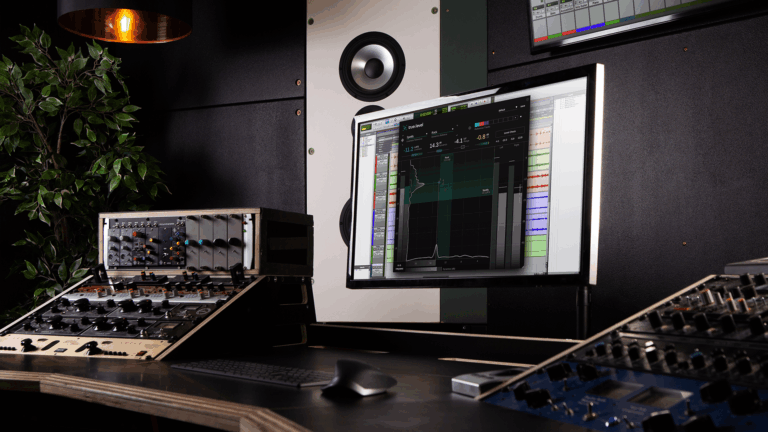
Many are aware of the process of mastering a track; This article aims to unwrap the enigma that is mastering music, from what it is to what it does, and how to do it.
Read moreFeatures, specs & changelog